
PARSA BALALI
Title
CennaLab - Pathology Device

Designing a safety-critical pathology device interface where workflow precision and clarity directly impact clinical outcomes.
Healthcare
Clinical
AI
Year
2025-2026

My Role
UX Designer
Context & Constraints
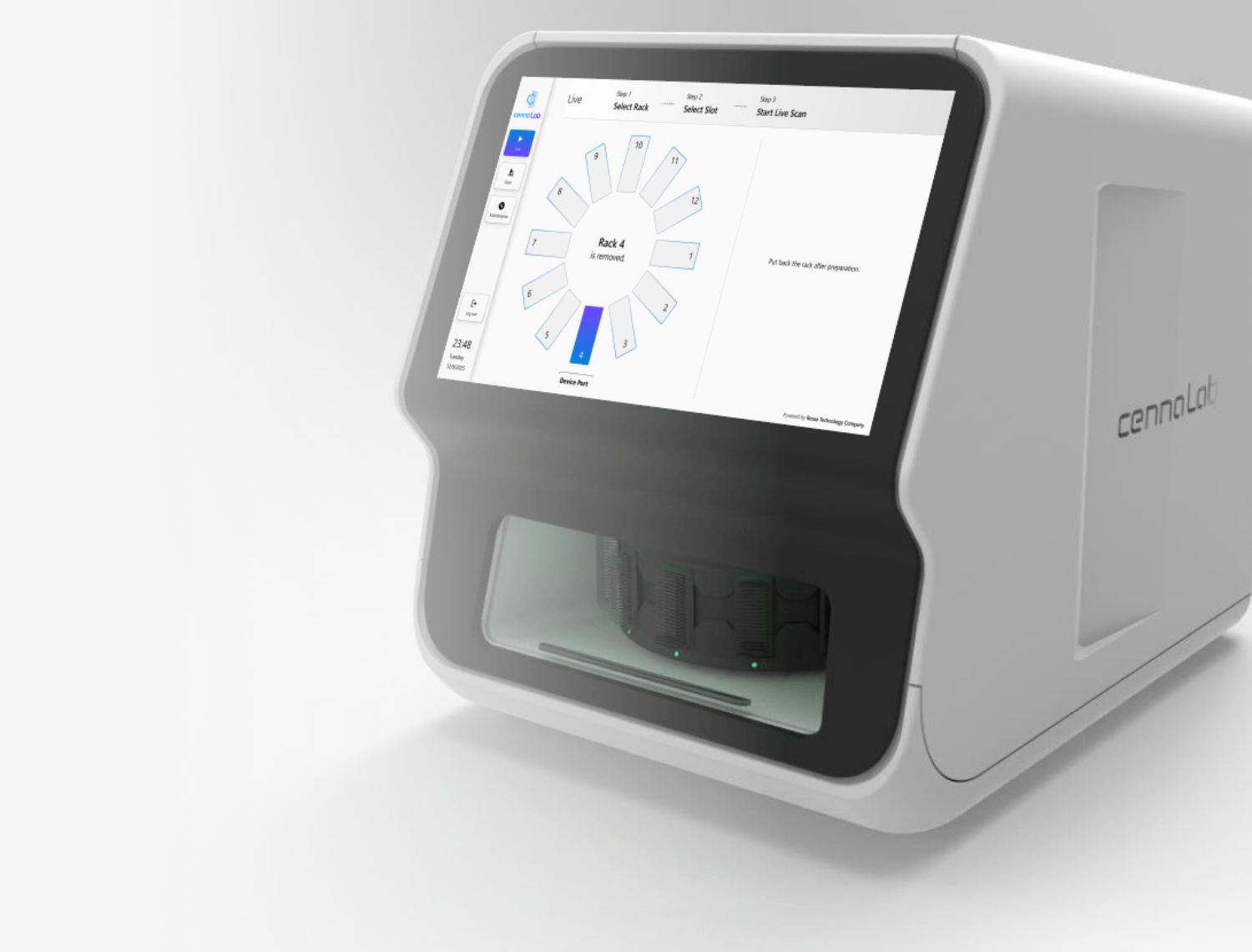
CennaLab is a pathology device designed to scan blood samples and, with the assistance of AI, identify potential abnormalities. The device operates through a 15.6-inch touchscreen interface within a clinical environment.
Unlike consumer software, this interface directly supports medical decision-making. Accuracy, clarity, and workflow reliability were critical, as errors could have real consequences for patient outcomes.
The workflow was highly specialized and differed significantly from conventional software patterns. The system needed to support:
- Lab operators handling daily sample analysis
- Clinical staff reviewing results
- Technicians and maintenance personnel servicing the device
Each group interacted with the same hardware but required distinct workflows and information structures.
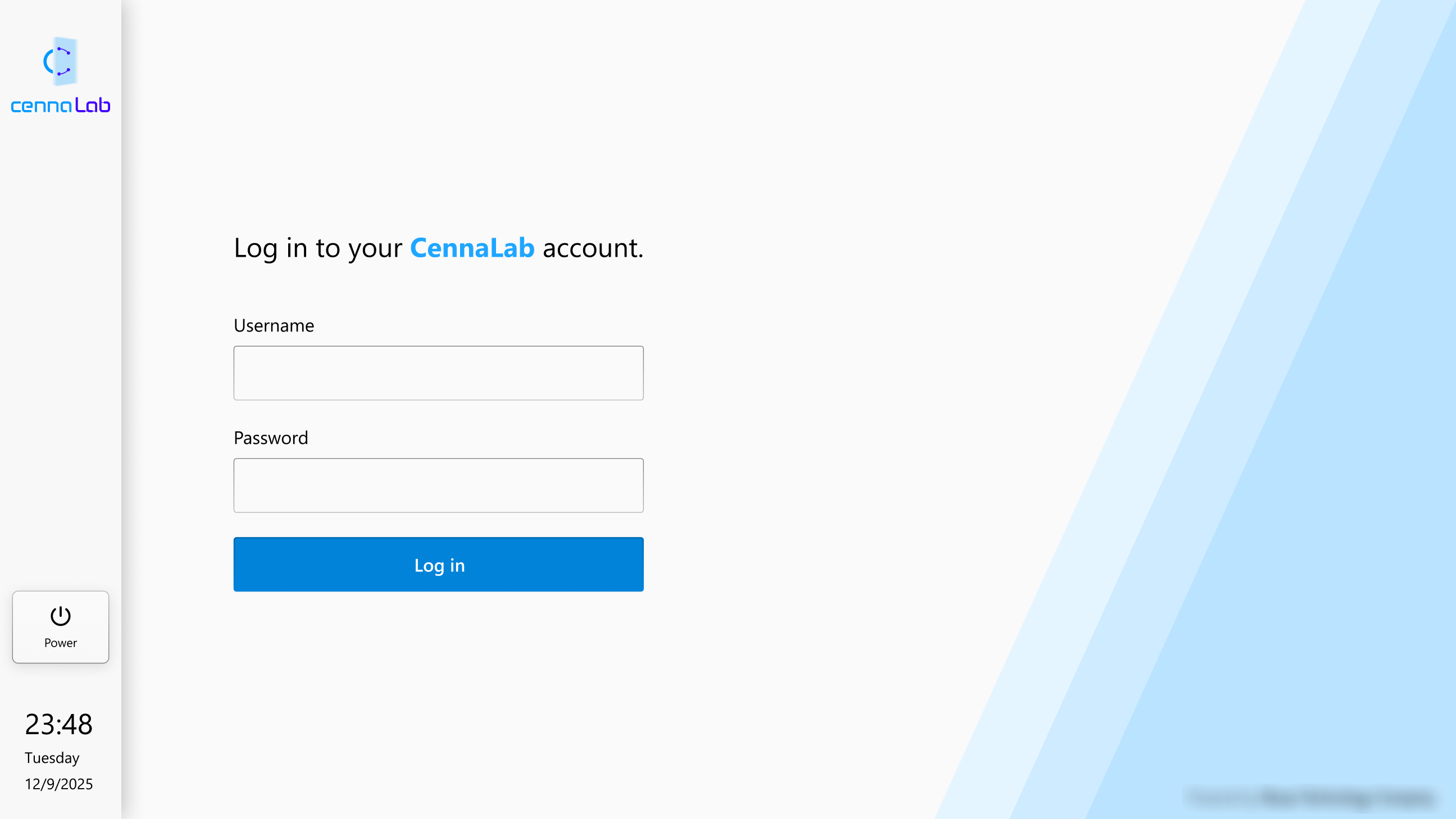
Development constraints included implementation on the WPF platform, which influenced interaction patterns, animation capabilities, and UI architecture decisions.
Problem Framing
The core challenge was not only usability, but operational safety under pressure.
The problem became:
How can a medical device interface guide users through a precise, high-stakes workflow while minimizing cognitive load and reducing the possibility of error?
The design had to support:
- Clear sequential steps
- Error prevention and validation
- Immediate visibility of critical information
- Distinction between operational and maintenance workflows
The system needed to feel structured and reliable rather than flexible or expressive.
Key Decisions
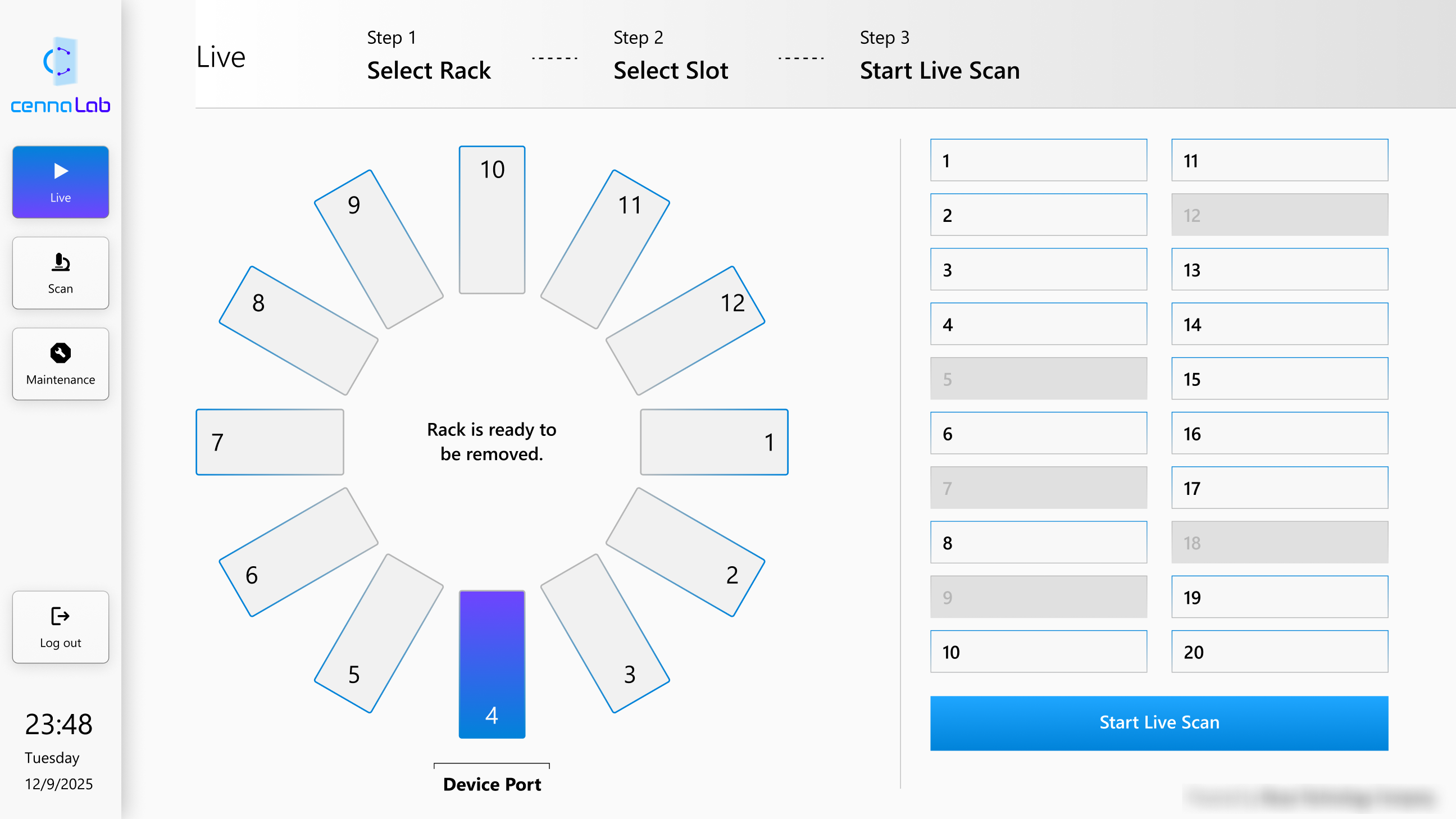
Structured the workflow as a guided sequence to reduce ambiguity and prevent skipped steps.
Tradeoff: Reduced flexibility in exchange for operational safety.
- Designed clear visual hierarchy for AI results, ensuring abnormal findings were immediately distinguishable without overwhelming the user.
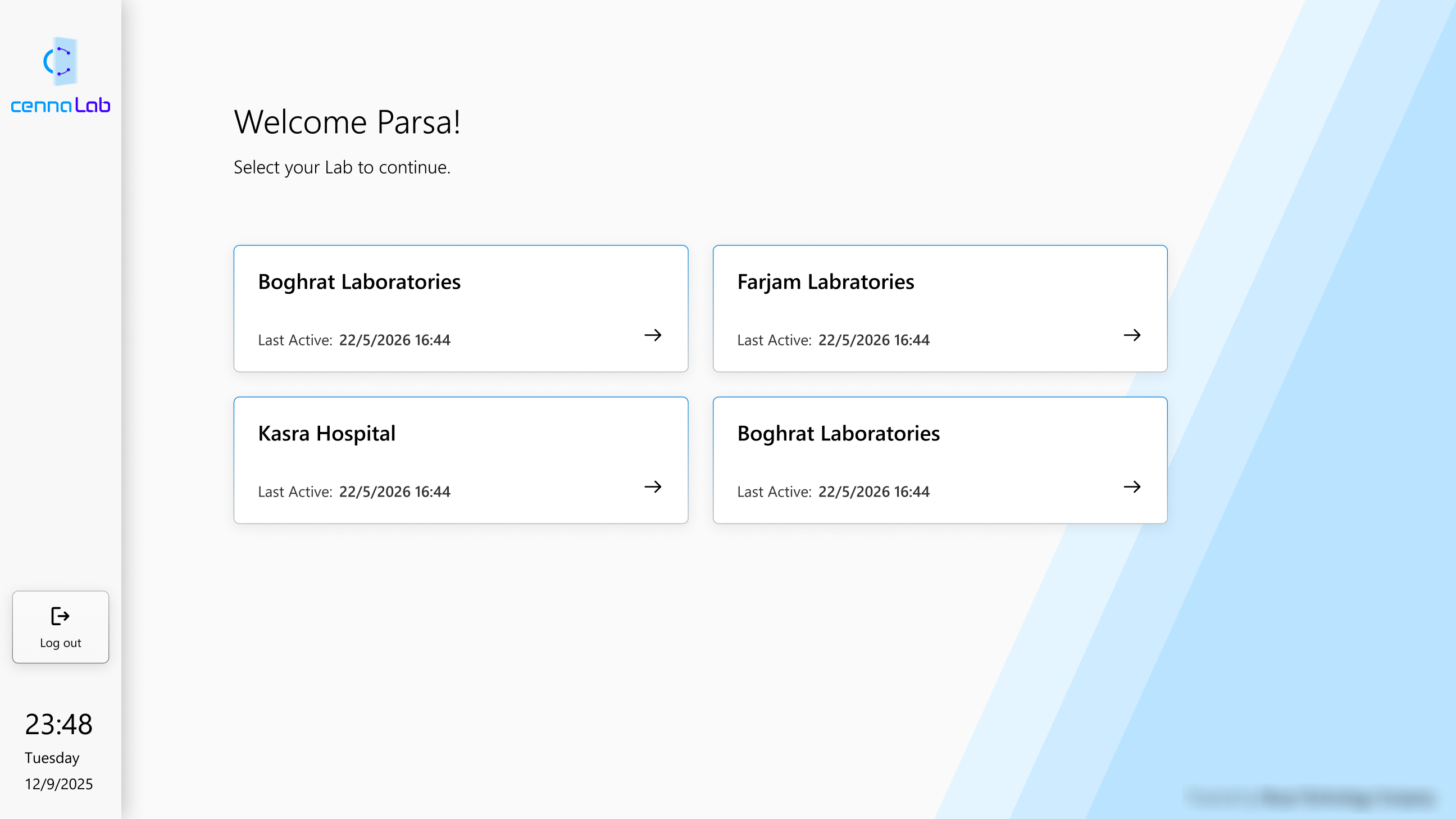
- Separated operational workflows from technician and maintenance paths to prevent accidental cross-access and reduce interface noise.
- Optimized touch targets and interaction spacing specifically for a 15.6-inch touchscreen in clinical settings.
- Worked within WPF constraints to prioritize clarity and stability over animation-heavy interactions.
Outcome & Impact
CennaLab underwent clinical testing with real users in lab environments. Observational validation confirmed that users were able to follow the guided workflow with minimal confusion and without major usability barriers.
The structured interaction model reduced ambiguity during critical steps and supported safe operation in high-attention environments. The final interface balanced clarity, reliability, and platform constraints while supporting AI-assisted diagnostics in a clinical context.
Reflection
Designing for a medical device reinforced the importance of reducing ambiguity in high-stakes systems. In environments where decisions affect patient health, clarity, predictability, and structured workflows outweigh aesthetic flexibility.
LET’S GET IN TOUCH.



PARSA BALALI
All rights reserved by Parsa Balali. 2026©
PARSA BALALI
WORKS
RESUME
TIMELINE
CONTACT
Title
CennaLab - Pathology Device

Designing a safety-critical pathology device interface where workflow precision and clarity directly impact clinical outcomes.
Healthcare
Clinical
AI
Year
2025-2026

My Role
UX Designer
Context & Constraints
CennaLab is a pathology device designed to scan blood samples and, with the assistance of AI, identify potential abnormalities. The device operates through a 15.6-inch touchscreen interface within a clinical environment.
Unlike consumer software, this interface directly supports medical decision-making. Accuracy, clarity, and workflow reliability were critical, as errors could have real consequences for patient outcomes.
The workflow was highly specialized and differed significantly from conventional software patterns. The system needed to support:
- Lab operators handling daily sample analysis
- Clinical staff reviewing results
- Technicians and maintenance personnel servicing the device
Each group interacted with the same hardware but required distinct workflows and information structures.
Development constraints included implementation on the WPF platform, which influenced interaction patterns, animation capabilities, and UI architecture decisions.
Problem Framing
The core challenge was not only usability, but operational safety under pressure.
The problem became:
How can a medical device interface guide users through a precise, high-stakes workflow while minimizing cognitive load and reducing the possibility of error?
The design had to support:
- Clear sequential steps
- Error prevention and validation
- Immediate visibility of critical information
- Distinction between operational and maintenance workflows
The system needed to feel structured and reliable rather than flexible or expressive.
Key Decisions
Structured the workflow as a guided sequence to reduce ambiguity and prevent skipped steps.
Tradeoff: Reduced flexibility in exchange for operational safety.
- Designed clear visual hierarchy for AI results, ensuring abnormal findings were immediately distinguishable without overwhelming the user.
- Separated operational workflows from technician and maintenance paths to prevent accidental cross-access and reduce interface noise.
- Optimized touch targets and interaction spacing specifically for a 15.6-inch touchscreen in clinical settings.
- Worked within WPF constraints to prioritize clarity and stability over animation-heavy interactions.
Outcome & Impact
CennaLab underwent clinical testing with real users in lab environments. Observational validation confirmed that users were able to follow the guided workflow with minimal confusion and without major usability barriers.
The structured interaction model reduced ambiguity during critical steps and supported safe operation in high-attention environments. The final interface balanced clarity, reliability, and platform constraints while supporting AI-assisted diagnostics in a clinical context.
Reflection
Designing for a medical device reinforced the importance of reducing ambiguity in high-stakes systems. In environments where decisions affect patient health, clarity, predictability, and structured workflows outweigh aesthetic flexibility.
LET’S GET IN TOUCH.
PARSA BALALI
All rights reserved by Parsa Balali. 2026©
PARSA BALALI
WORKS
RESUME
TIMELINE
CONTACT
Project Title
CennaLab - Pathology Device

Designing a safety-critical pathology device interface where workflow precision and clarity directly impact clinical outcomes.
Healthcare
Clinical
AI
My Role
UX Designer
Year
2025-2026
Context & Constraints
CennaLab is a pathology device designed to scan blood samples and, with the assistance of AI, identify potential abnormalities. The device operates through a 15.6-inch touchscreen interface within a clinical environment.
Unlike consumer software, this interface directly supports medical decision-making. Accuracy, clarity, and workflow reliability were critical, as errors could have real consequences for patient outcomes.
The workflow was highly specialized and differed significantly from conventional software patterns. The system needed to support:
- Lab operators handling daily sample analysis
- Clinical staff reviewing results
- Technicians and maintenance personnel servicing the device
Each group interacted with the same hardware but required distinct workflows and information structures.
Development constraints included implementation on the WPF platform, which influenced interaction patterns, animation capabilities, and UI architecture decisions.
Problem Framing
The core challenge was not only usability, but operational safety under pressure.
The problem became:
How can a medical device interface guide users through a precise, high-stakes workflow while minimizing cognitive load and reducing the possibility of error?
The design had to support:
- Clear sequential steps
- Error prevention and validation
- Immediate visibility of critical information
- Distinction between operational and maintenance workflows
The system needed to feel structured and reliable rather than flexible or expressive.
Key Decisions
Structured the workflow as a guided sequence to reduce ambiguity and prevent skipped steps.
Tradeoff: Reduced flexibility in exchange for operational safety.
- Designed clear visual hierarchy for AI results, ensuring abnormal findings were immediately distinguishable without overwhelming the user.
- Separated operational workflows from technician and maintenance paths to prevent accidental cross-access and reduce interface noise.
- Optimized touch targets and interaction spacing specifically for a 15.6-inch touchscreen in clinical settings.
- Worked within WPF constraints to prioritize clarity and stability over animation-heavy interactions.
Outcome & Impact
CennaLab underwent clinical testing with real users in lab environments. Observational validation confirmed that users were able to follow the guided workflow with minimal confusion and without major usability barriers.
The structured interaction model reduced ambiguity during critical steps and supported safe operation in high-attention environments. The final interface balanced clarity, reliability, and platform constraints while supporting AI-assisted diagnostics in a clinical context.
Reflection
Designing for a medical device reinforced the importance of reducing ambiguity in high-stakes systems. In environments where decisions affect patient health, clarity, predictability, and structured workflows outweigh aesthetic flexibility.
LET’S GET IN TOUCH.


PARSA BALALI
All rights reserved by Parsa Balali. 2026©