
PARSA BALALI
Title
RadarPlus

Designing a high-speed multiplayer experience that lets players coordinate without breaking gameplay flow.
Multi-Player Gaming
Social
Entertainment
Year
2023

My Role
Product Designer
Context & Constraints
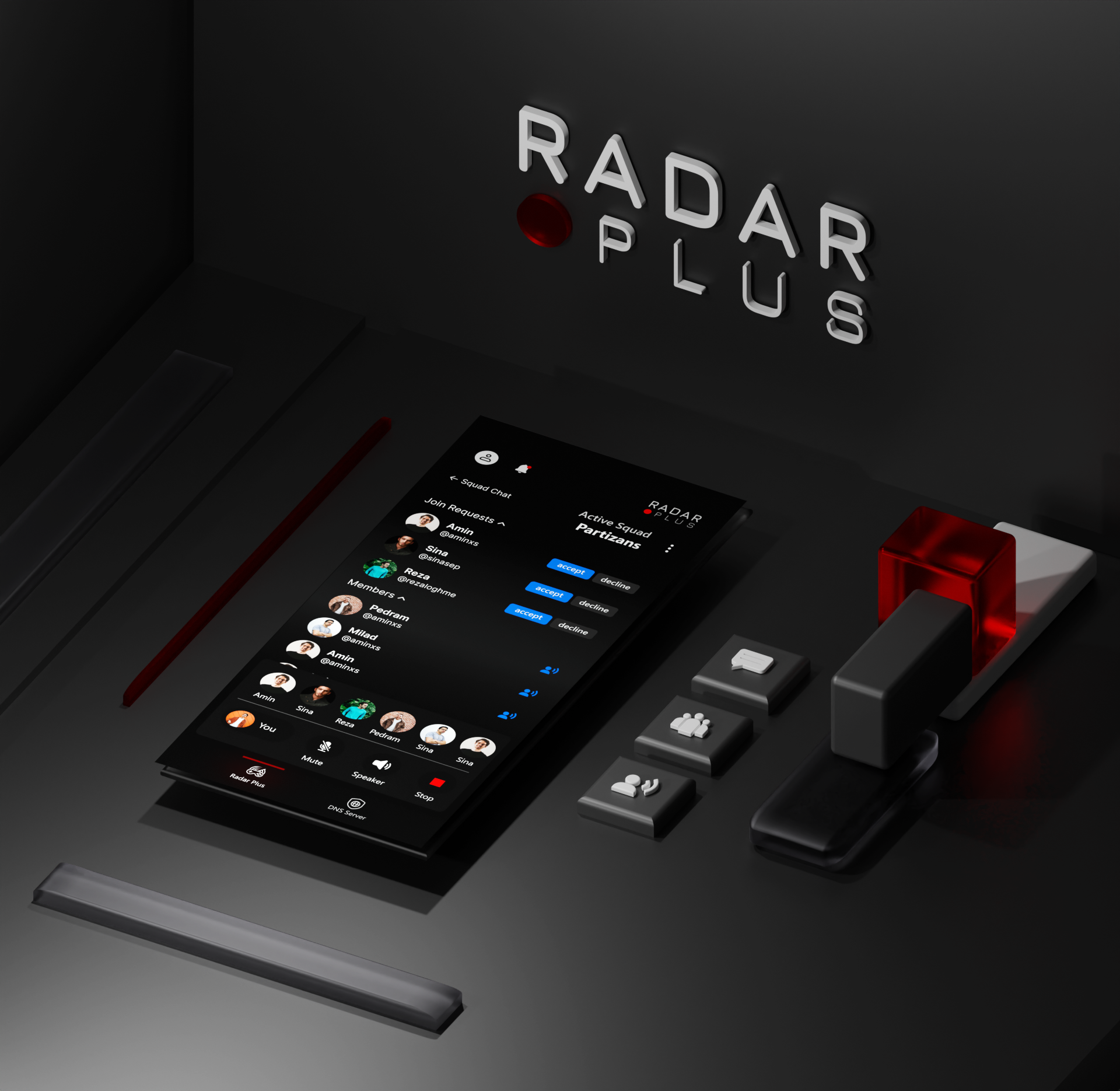
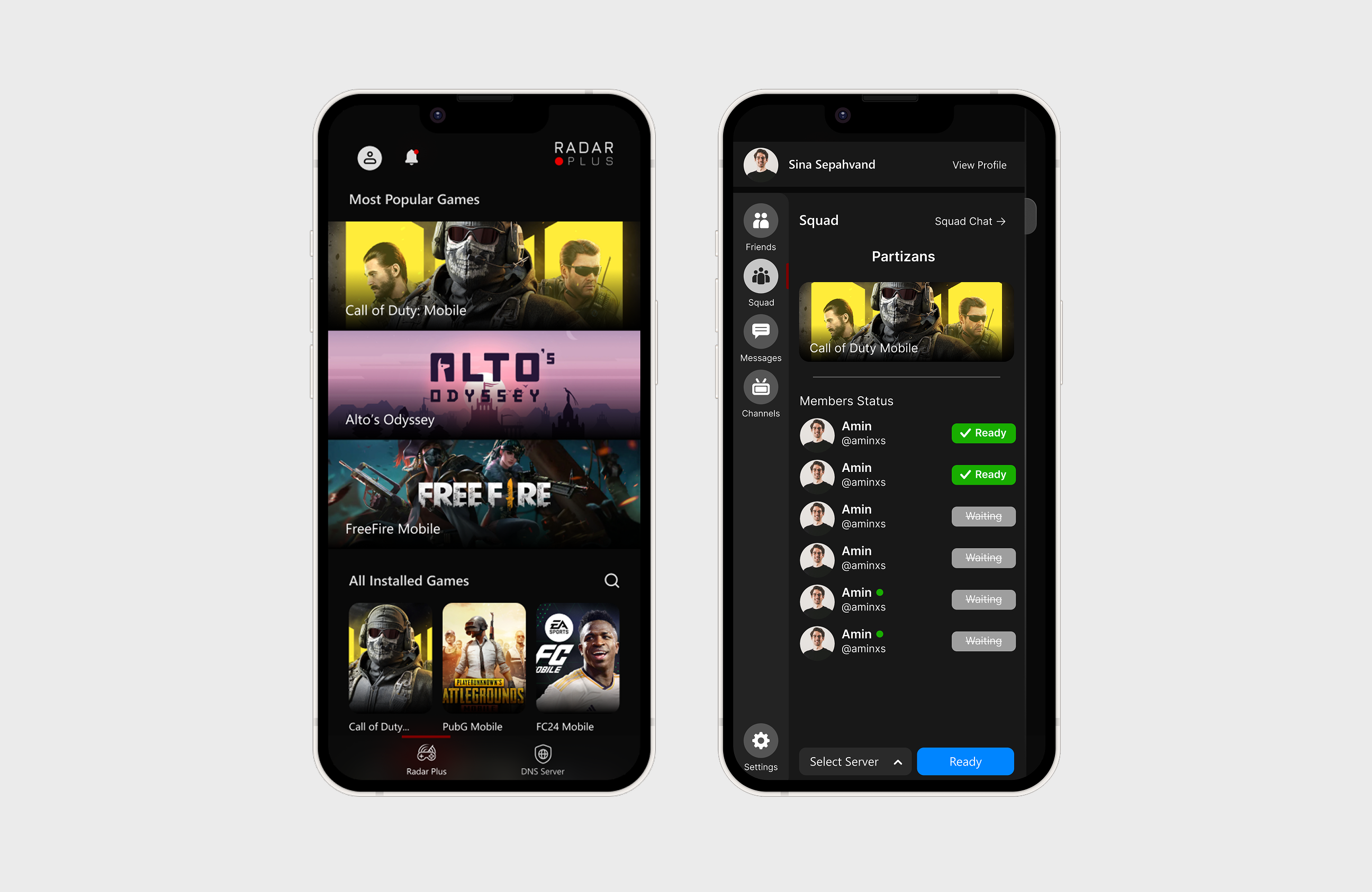
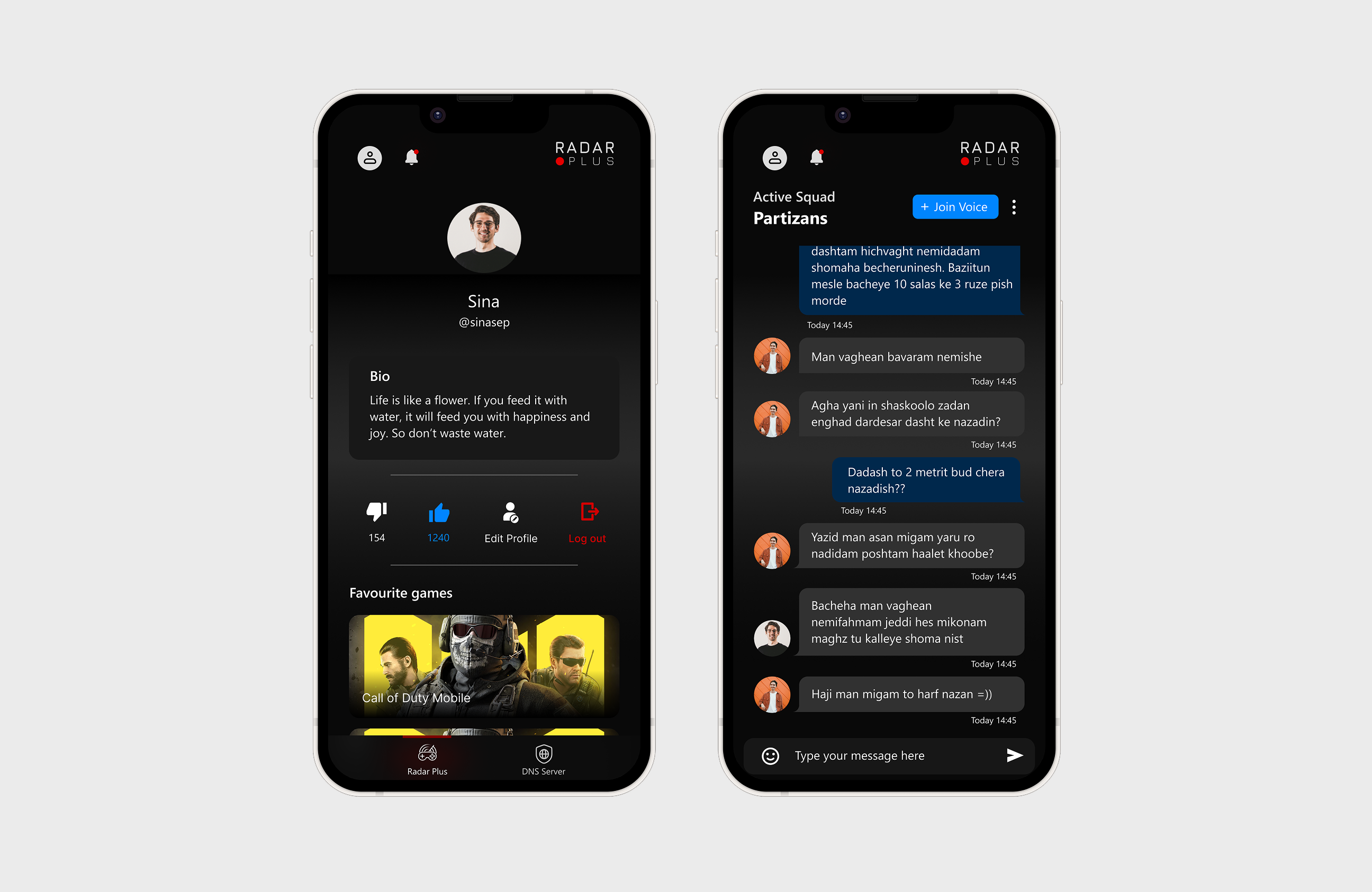
RadarPlus is a multiplayer gaming platform that allows users to form groups, start games together, and communicate via voice and text while actively playing. Each game contains multiple rooms, with users frequently switching contexts mid-game.
The primary constraint was speed. Any interaction that slowed players down or required excessive attention risked breaking immersion and reducing engagement. The experience had to support social actions—inviting friends, switching rooms, communicating—without interrupting gameplay pace.
Technical constraints included real-time synchronization and close coordination with Android and iOS front-end implementations.
Problem Framing
The core challenge wasn’t adding features, but how players move between spaces while under cognitive and time pressure. Traditional navigation patterns (tabs, menus, deep hierarchies) introduced friction and attention shifts that conflicted with the fast rhythm of gameplay.
The problem was reframed as:
How can players move between game, communication, and social spaces almost instinctively, without pausing the game?
Key Decisions
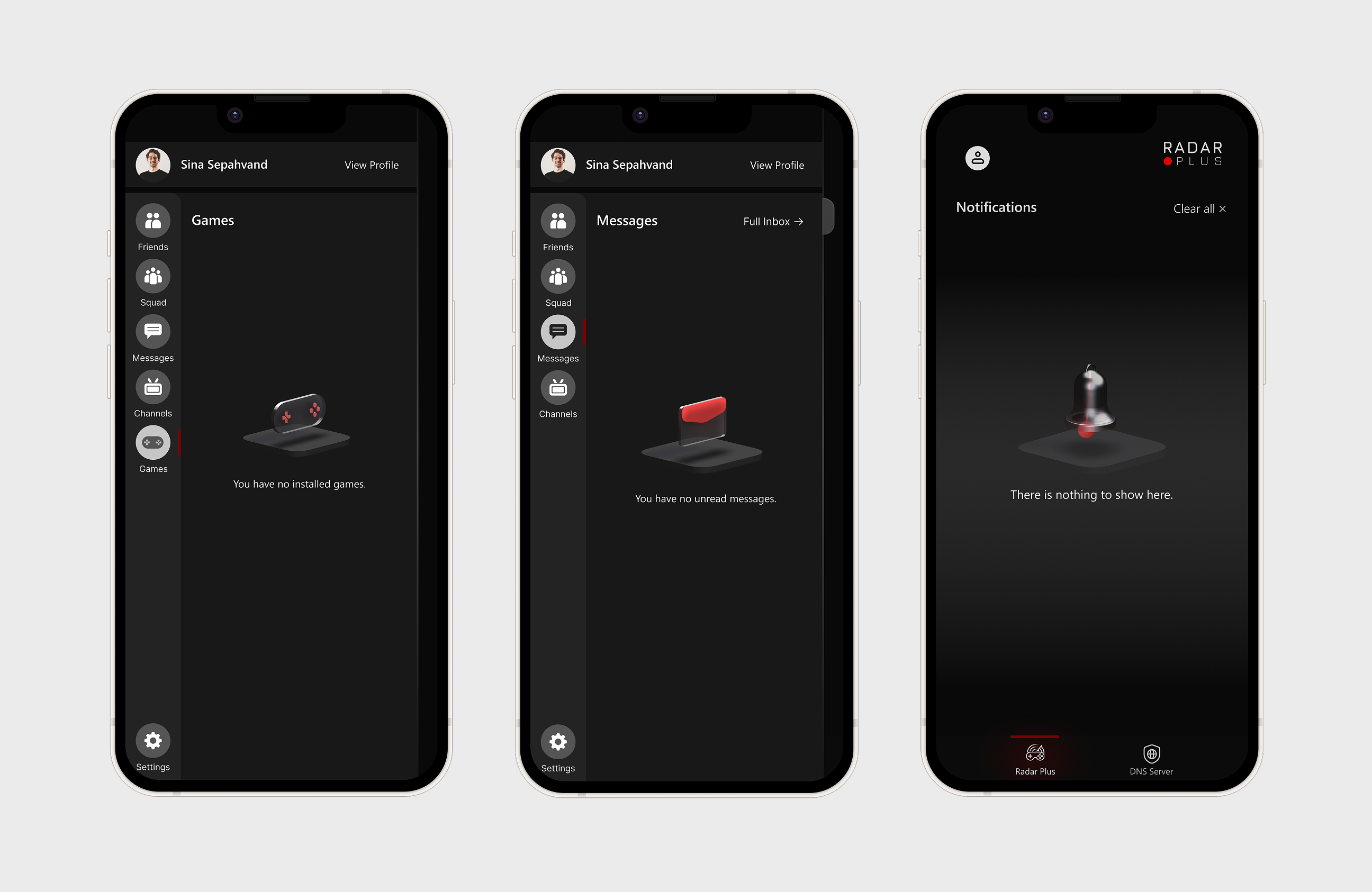
- Introduced three dynamic spaces navigated via horizontal swiping, allowing users to move between core contexts at high speed without breaking focus.
Tradeoff: Reduced initial discoverability in exchange for faster mastery and long-term efficiency. - Prioritized gesture-based navigation over visible controls to minimize UI noise during gameplay.
Tradeoff: Required validating whether users could learn the system quickly enough. - Designed interactions in close collaboration with front-end developers to ensure performance parity across Android and iOS, avoiding animation or latency issues that could harm perceived speed.
Outcome & impact
RadarPlus reached approximately 24,000 users within the first three months after launch. User research showed that players adapted to the swipe-based navigation very quickly, with minimal confusion after initial use.
Once learned, the interaction model caused no major usability issues and supported fast-paced gameplay effectively, validating the decision to prioritize speed over conventional navigation patterns.
Reflection
This project reinforced the importance of designing for pace and cognitive load, not just usability in isolation. It also highlighted how unconventional interaction models can succeed when they are grounded in user behavior and validated early through research.
LET’S GET IN TOUCH.



PARSA BALALI
All rights reserved by Parsa Balali. 2026©
PARSA BALALI
WORKS
RESUME
TIMELINE
CONTACT
Title
RadarPlus

Designing a high-speed multiplayer experience that lets players coordinate without breaking gameplay flow.
Multi-Player Gaming
Social
Entertainment
Year
2023

My Role
Product Designer
Context & Constraints
RadarPlus is a multiplayer gaming platform that allows users to form groups, start games together, and communicate via voice and text while actively playing. Each game contains multiple rooms, with users frequently switching contexts mid-game.
The primary constraint was speed. Any interaction that slowed players down or required excessive attention risked breaking immersion and reducing engagement. The experience had to support social actions—inviting friends, switching rooms, communicating—without interrupting gameplay pace.
Technical constraints included real-time synchronization and close coordination with Android and iOS front-end implementations.
Problem Framing
The core challenge wasn’t adding features, but how players move between spaces while under cognitive and time pressure. Traditional navigation patterns (tabs, menus, deep hierarchies) introduced friction and attention shifts that conflicted with the fast rhythm of gameplay.
The problem was reframed as:
How can players move between game, communication, and social spaces almost instinctively, without pausing the game?
Key Decisions
- Introduced three dynamic spaces navigated via horizontal swiping, allowing users to move between core contexts at high speed without breaking focus.
Tradeoff: Reduced initial discoverability in exchange for faster mastery and long-term efficiency. - Prioritized gesture-based navigation over visible controls to minimize UI noise during gameplay.
Tradeoff: Required validating whether users could learn the system quickly enough. - Designed interactions in close collaboration with front-end developers to ensure performance parity across Android and iOS, avoiding animation or latency issues that could harm perceived speed.
Outcome & impact
RadarPlus reached approximately 24,000 users within the first three months after launch. User research showed that players adapted to the swipe-based navigation very quickly, with minimal confusion after initial use.
Once learned, the interaction model caused no major usability issues and supported fast-paced gameplay effectively, validating the decision to prioritize speed over conventional navigation patterns.
Reflection
This project reinforced the importance of designing for pace and cognitive load, not just usability in isolation. It also highlighted how unconventional interaction models can succeed when they are grounded in user behavior and validated early through research.
LET’S GET IN TOUCH.
PARSA BALALI
All rights reserved by Parsa Balali. 2026©
PARSA BALALI
WORKS
RESUME
TIMELINE
CONTACT
Project Title
RadarPlus

Designing a high-speed multiplayer experience that lets players coordinate without breaking gameplay flow.
Multi-Player Gaming
Social
Entertainment
My Role
Product Designer
Year
2023
Context & Constraints
RadarPlus is a multiplayer gaming platform that allows users to form groups, start games together, and communicate via voice and text while actively playing. Each game contains multiple rooms, with users frequently switching contexts mid-game.
The primary constraint was speed. Any interaction that slowed players down or required excessive attention risked breaking immersion and reducing engagement. The experience had to support social actions—inviting friends, switching rooms, communicating—without interrupting gameplay pace.
Technical constraints included real-time synchronization and close coordination with Android and iOS front-end implementations.
Problem Framing
The core challenge wasn’t adding features, but how players move between spaces while under cognitive and time pressure. Traditional navigation patterns (tabs, menus, deep hierarchies) introduced friction and attention shifts that conflicted with the fast rhythm of gameplay.
The problem was reframed as:
How can players move between game, communication, and social spaces almost instinctively, without pausing the game?
Key Decisions
- Introduced three dynamic spaces navigated via horizontal swiping, allowing users to move between core contexts at high speed without breaking focus.
Tradeoff: Reduced initial discoverability in exchange for faster mastery and long-term efficiency. - Prioritized gesture-based navigation over visible controls to minimize UI noise during gameplay.
Tradeoff: Required validating whether users could learn the system quickly enough. - Designed interactions in close collaboration with front-end developers to ensure performance parity across Android and iOS, avoiding animation or latency issues that could harm perceived speed.
Outcome & impact
RadarPlus reached approximately 24,000 users within the first three months after launch. User research showed that players adapted to the swipe-based navigation very quickly, with minimal confusion after initial use.
Once learned, the interaction model caused no major usability issues and supported fast-paced gameplay effectively, validating the decision to prioritize speed over conventional navigation patterns.
Reflection
This project reinforced the importance of designing for pace and cognitive load, not just usability in isolation. It also highlighted how unconventional interaction models can succeed when they are grounded in user behavior and validated early through research.
LET’S GET IN TOUCH.


PARSA BALALI
All rights reserved by Parsa Balali. 2026©